

Setting up a condition
Select the option you want to control, scroll to Conditions, and click Setup condition.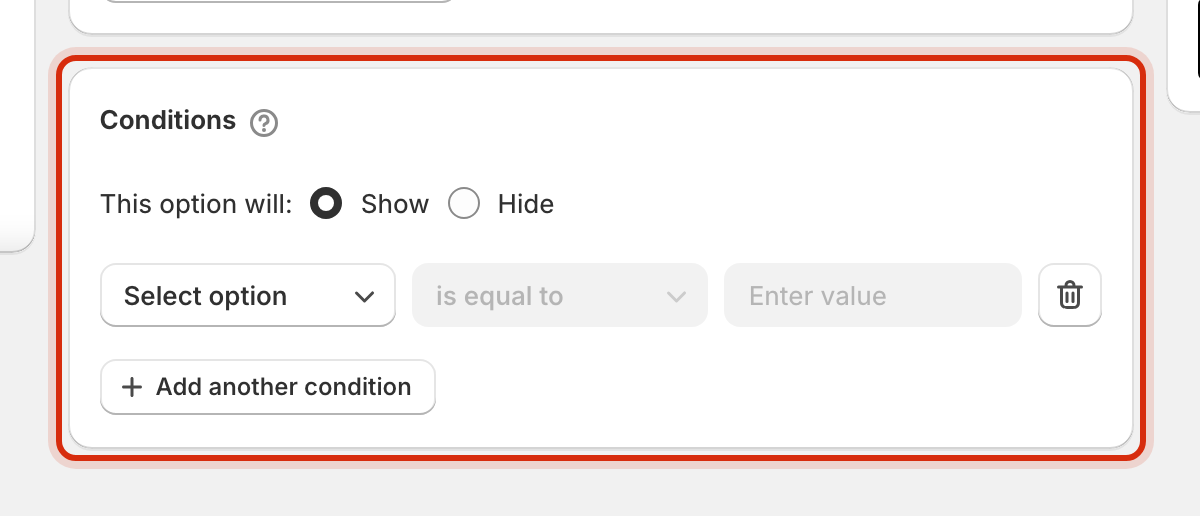
A condition rule: what should happen, and what has to be true for it to happen.
1
Decide what should happen
This option will: Show or Hide. Show is the usual choice: the option stays out of the way until it is needed.
2
Say when it should happen
Pick the option being watched, choose how to compare it, and enter the value to compare against.
The three comparisons
is equal to covers almost everything. The other two exist for options where a customer can pick more than one answer, where “did they choose gift wrap at all” and “did they choose only gift wrap” are different questions.
Options that only ever hold a single answer offer is equal to on its own. If you were expecting the other comparisons and cannot see them, that is why.
Combining conditions
Add another condition adds a second rule to the same option, so you can require more than one thing to be true before it appears.Getting it right
The value you compare against is the option’s Value, the internal name, not the Label the customer reads. If you renamed the label from “1” to “Fair”, the condition still watches for1. See Manage your values.
Test the rule on your own product page before you rely on it. Walk through it as a customer would: pick the triggering choice and confirm the option appears, then pick something else and confirm it goes away.
Where to next
Manage your values
The values your conditions watch for.
Build your options
The full set of option types.
Charge extra for a choice
Reveal a paid upgrade only when relevant.
Assign products and go live
Publish so your rules reach the storefront.